


We continue to move forward with great enthusiasm in the development of new resources aimed at bringing computational thinking closer to adult education in an accessible, practical, and meaningful way.
The Computational Seniors project is designed to support adult educators and trainers in integrating computational thinking into their teaching practice, understanding it not only as a digital competence but also as a way of structuring ideas, solving problems, and making decisions in a more logical and creative manner.
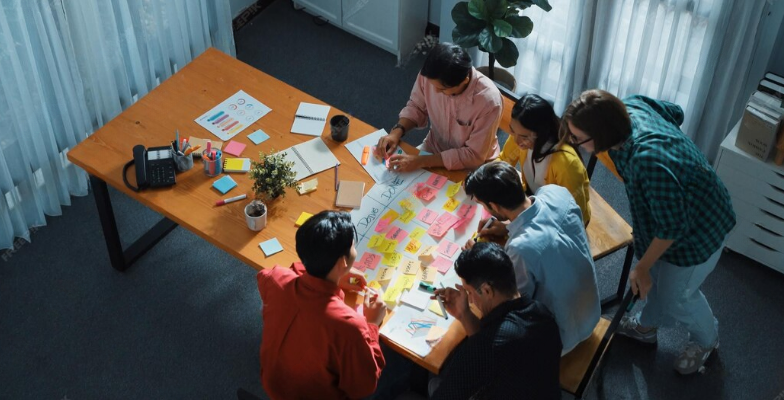
In this new phase, we have started working on one of the most dynamic and engaging parts of the project: the creation of the “unplugged” activities box. This will be a set of educational resources that allow learners to explore the foundations of computational thinking without the need for computers or digital devices. This unplugged approach opens up opportunities for a more hands-on, interactive, and collaborative learning experience, where participants can move, experiment, and learn by doing.
These activities are designed to make computational thinking feel alive, accessible, and relevant, even in contexts where access to technology may be limited. Through gamified activities, group dynamics, and challenges inspired by everyday situations, participants will practice essential skills such as breaking down complex problems into smaller parts, identifying patterns, creating logical sequences, and designing clear step-by-step instructions to achieve a goal. All of this is introduced in a playful and engaging way, helping learners approach computational thinking naturally, without perceiving it as something abstract or overly technical.
One of the key strengths of this activities box is its practical value for adult educators. It is not just a collection of ideas, but a ready-to-use, flexible resource that can be easily adapted to different learning contexts. This will allow trainers to integrate these activities into their sessions smoothly, encouraging active participation, collaboration, and learner motivation.
With this development, the COMPutational Seniors project continues to take meaningful steps towards creating innovative and useful educational materials that respond to the real needs of adult education across Europe. There is a strong sense of excitement around this new phase, as it opens up fresh possibilities for learning and teaching computational thinking in a more human, approachable, and inclusive way for everyone.